Vinyl window frames are made from extruded polyvinyl chloride (PVC), a rigid plastic formed into hollow profiles that form the structural border of a window unit. If you've been getting quotes for impact window replacement in Brevard or Indian River County, you've seen the word "vinyl" on almost every estimate. Most homeowners nod along without knowing what it actually means for their home, and that gap can cost them. This guide covers what vinyl frames are, how the good ones differ from the cheap ones, and how Florida's climate will affect them over time.
What "Vinyl" Actually Means in a Window Frame
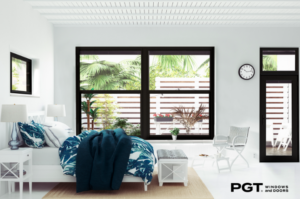
Vinyl frames mean you're not painting, sealing, or worrying about rot. That's the short version, and for most Florida homeowners, it's the reason vinyl became the default frame material over the past two decades.
The longer version: vinyl, in the context of window frames, refers to rigid PVC engineered specifically for windows. It doesn't conduct heat the way metal does. It doesn't absorb moisture the way wood does. And it holds up in a humid coastal climate without the ongoing maintenance other materials demand.
When you see "vinyl frame" on a quote, what you're looking at is a precisely shaped hollow form that surrounds the glass unit, anchors into your wall opening, and keeps conditioned air in and Florida summer heat out.
Not all vinyl frames do that equally well. The profile shape, wall thickness, and internal construction vary significantly between manufacturers. In Florida's climate, those differences show up over time.
How Quality Vinyl Frames Are Built
If two vinyl windows look identical on the outside but one costs considerably more, the difference is usually inside the frame. Quality vinyl frames are built with multi-chamber profiles, UV-stabilized compounds, and warm-edge spacers. Cheap frames cut corners on all three.
| Feature | Cheap Vinyl | Quality Vinyl |
| Frame chambers | 2 to 3 | 4 or more |
| Wall thickness | Thin | Reinforced |
| UV stabilizers | None or surface-applied | Built into the compound |
| Spacer type | Aluminum | Warm-edge (non-metallic or hybrid) |
| Typical Florida lifespan | 10 to 15 years | 25 to 30+ years |
What's Inside the Frame
A quality vinyl frame is divided into separate enclosed compartments called chambers. Each one traps a pocket of still air, which is one of the most effective insulators available. More chambers means better insulation and a frame that holds its shape under wind load. A basic vinyl frame might have two or three. A quality impact frame built for Florida's coastal climate will have more, with thicker walls between them.
You won't see this on the outside. But you'll feel it on your July energy bill.
The Spacer Between the Glass Panes
Every window has a spacer, the component that holds the two panes of laminated glass apart. In cheaper windows, it's usually aluminum, which conducts heat straight to the edge of the glass. That creates a warm edge where heat transfer concentrates, working against the insulation the rest of the window provides.
Quality impact windows use a warm-edge spacer made from non-metallic or hybrid material instead. It's a small change with a noticeable effect on how the window performs when Florida's sun is hitting it all day.
Why UV Protection in the Frame Matters
Here's something most contractors don't mention: vinyl is a plastic, and plastics degrade under prolonged UV exposure. Florida gets more UV hours per year than nearly anywhere in the continental U.S.
A cheap vinyl frame will eventually yellow, become brittle, and crack. Not in year one, but the timeline is shorter than most homeowners expect. Quality frames have UV stabilizers built directly into the material compound, not just applied to the surface. That's a major part of what separates a frame that holds up for 30 years from one that doesn't.
Color is part of this, too. Dark vinyl frames absorb significantly more solar heat than lighter ones. In Florida, white, tan, and clay are the practical choices for south- and west-facing windows because they reduce thermal stress on the frame and extend its life. If a contractor quotes you a dark frame on a sun-exposed elevation, ask why.
What Florida's Climate Does to Vinyl Frames Over Time
Florida is genuinely hard on building materials. The good news is that vinyl handles this climate better than most. The important thing is understanding what it does and doesn't do.
All vinyl expands and contracts with temperature changes. On a sun-facing wall in Florida, that movement is real; a 10-foot vinyl frame can shift by as much as a quarter inch between a cold January morning and a peak August afternoon. That's not a defect. It's physics. A quality installation accounts for it with proper clearances and sealants rated for Florida's temperature range. When that's done right, you'll never notice it. When it isn't, you'll eventually see it in how the window operates or how the seal holds.
Salt air is where vinyl actually shines compared to metal frames. It doesn't corrode. Humidity won't damage it. The main maintenance a quality vinyl frame needs is a wash with mild soap and water once or twice a year to clear out what accumulates in the tracks.
A properly installed quality vinyl impact window in Florida should last 25 to 30 years or more. Product quality, installation workmanship, and frame color on sun-exposed walls are the variables that matter most.
What the Energy Numbers on Vinyl Windows Actually Mean
If your FPL bill spikes every summer and you're replacing single-pane or older aluminum-framed windows, it's worth understanding your new windows' energy performance. Two numbers on the spec sheet actually matter.
SHGC (Solar Heat Gain Coefficient) measures how much of the sun's energy passes through the glass into your home. Lower is better. For Florida, you want 0.23 or below, especially on south- and west-facing windows. That single number has more impact on your cooling costs than almost anything else on the spec sheet.
U-Factor measures how easily heat moves through the window overall. Lower is better here, too. A U-Factor of 0.32 or below qualifies for ENERGY STAR's Southern Climate Zone, as the U.S. Department of Energy documents in its window energy performance ratings.
Because vinyl conducts heat less readily than aluminum, a vinyl-framed window already has a thermal advantage at the frame level. Adding low-E impact glass and a warm-edge spacer to a vinyl impact window can reduce cooling costs by up to 30%. For most Brevard and Indian River County homeowners replacing older windows, that's a real number that adds up fast, part of a broader return covered in the average cost of impact windows in Florida.
Vinyl Frames and Hurricane Performance in Brevard and Indian River Counties
Vinyl frames are hurricane-resistant, but that rating doesn't come from the frame material alone. It comes from how the entire window unit is built and tested.
In Brevard and Indian River Counties, windows must carry Florida Product Approval (FPA) certification from the Florida Building Commission. Getting it isn't simple: the window, frame, glass, and hardware must pass independent laboratory testing.
The Design Pressure (DP) rating indicates how much wind load a window can withstand, measured in pounds per square foot. A DP50 is the recommended minimum for coastal Florida homes. Quality-certified windows are rated well above that.
Think of it this way: the laminated glass stops debris, the frame holds the assembly together, and the installation holds everything in the wall when real wind loads hit. All three have to be right.
What to Ask Before You Buy Vinyl Impact Windows
Before buying vinyl impact windows, ask your contractor about DP ratings, Florida Product Approval status, who actually does the installation, and what the workmanship warranty covers.
Those four areas are where most problems surface after the fact.
- What is the DP rating for this product on my specific opening sizes? Not a general range, the actual rated number for your windows.
- Does this product carry Florida Product Approval certification? Ask for the approval number if you want to verify it directly with the state.
- Who installs the windows? In-house employees or subcontractors? The answer determines who is accountable when something goes wrong.
- What does the workmanship warranty cover, and for how long? The manufacturer's warranty covers material defects. The workmanship warranty covers installation, and most contractors offer a warranty of 1 year or less.
- What color frame is being quoted on my sun-exposed elevations, and why?
A contractor who does quality work can answer all of these without hesitation.
If the financial case is still part of your decision, the question of whether hurricane windows are worth it lays out what homeowners in this market actually see.
Frequently Asked Questions
What is a vinyl window frame?
A vinyl window frame is a structural border made from extruded rigid PVC that surrounds and anchors the glass unit in a window opening. In Florida, vinyl is the most common frame material for replacement windows because it resists heat, humidity, and salt air without requiring painting or sealing.
How long do vinyl windows last in Florida?
A quality vinyl impact window properly installed in Florida typically lasts 25 to 30 years or more. The biggest factors are UV stabilizer content in the frame compound, installation workmanship, and frame color on sun-exposed elevations. A cheap vinyl frame in the wrong color on a west-facing wall can fall well short of that.
Do vinyl windows warp in Florida's heat?
Cheap vinyl can warp, especially in dark colors on south- and west-facing walls. Quality vinyl frames with UV stabilizers built into the compound and multi-chamber construction are engineered to handle Florida's temperature swings. The installation matters just as much as proper expansion clearances, which are what keep the frame performing correctly year after year.
Are vinyl window frames hurricane-rated?
Yes, when the complete window unit carries Florida Product Approval certification and the required Design Pressure rating for your specific opening. The frame material alone doesn't determine hurricane resistance. The glass, hardware, and installation must be part of a tested, certified assembly.
What is the difference between cheap vinyl and quality vinyl windows?
Mostly what you can't see: number of frame chambers, wall thickness, UV stabilizer content, and spacer type. Cheap vinyl frames cut corners on all of these. The difference won't be obvious on install day. It becomes obvious over the years of Florida sun, heat, and humidity.
Why Brevard and Indian River County Homeowners Choose Sunset View
Sunset View Windows & Doors is a veteran-owned, family-operated company serving Brevard and Indian River County since 2006, founded by Robert Bitgood Sr. and now led by his son Ryan, a U.S. Army veteran who brought that same standard of accountability back to the trade.
Every installer who comes to your home is a Sunset View employee. That matters because it's what makes our 10-year workmanship warranty possible, one of the longest in the industry. When your own team does the work, you stand behind it differently than when you hand it off to a subcontractor.
As an authorized PGT Gold and Platinum Certified Dealer, we carry WinGuard Vinyl windows with Florida Product Approval, NFRC certification, and a DP +65/–70 PSF rating: products built for Brevard and Indian River County's coastal wind environment, installed by a crew that lives and works in the same communities you do.
If you're ready to talk through what vinyl impact windows would look like in your home, request a free quote, no pressure, no runaround, just straight answers from a team that knows this market.