Your energy bill spikes every July, hurricane season is a few months away, and you've gotten two quotes — one recommending vinyl, the other aluminum. Both contractors sound confident. Neither fully explains the difference.
Here's the honest answer: both materials perform well on Florida's Space Coast when correctly specified. The choice comes down to your home's specific needs — and more than the frame, the glass package, the Design Pressure rating, and who does the installation determine how your new windows actually perform.
This guide covers what matters for homeowners in Brevard and Indian River Counties, so you can make the decision with the full picture.
The Short Answer
If you want better energy efficiency, lower maintenance, and a proven solution for standard residential openings, vinyl is typically the right call. If your home has large glass spans, a modern architectural design, or structural requirements that demand extra rigidity, aluminum is the better fit.
What most comparisons leave out: the frame material is one part of the equation. The glass package — specifically the Solar Heat Gain Coefficient (SHGC) and Low-E coating — and the Design Pressure (DP) rating of the product have a greater impact on real-world performance than vinyl versus aluminum alone.
The right material for your home depends on your openings, your exposure, and what you're asking the windows to do.
How Vinyl and Aluminum Compare in Florida Conditions
| Feature | Vinyl Windows | Aluminum Windows |
| Energy Efficiency | High — non-conductive multi-chamber frame | Low - Can improve performance when paired with energy efficient glass |
| Structural Strength | Meets requirements for standard residential openings | High - Naturally stronger, can achieve much higher design pressures too |
| Coastal Maintenance | Moderate - regular cleaning and maintenance required | Moderate - regular cleaning and maintenance required |
| Typical Cost | Lower for standard openings | Higher — varies by opening size and design |
| Best Use | Standard residential openings, energy-focused homes | Large openings, modern architecture, higher wind speed priority |
Florida's climate puts windows through a specific stress test: intense sun from April through October, high humidity year-round, and the constant possibility of a named storm. Both materials have been engineered for these conditions, but they excel in different ways.
Vinyl frames are non-conductive. Heat does not pass through them the way it does through metal, which is a direct advantage in a state where cooling dominates your energy budget. Multi-chamber vinyl frame construction adds an extra layer of thermal resistance, slowing heat transfer at the frame level.
Aluminum frames are structurally rigid, which makes them the right choice when openings are large or when the design calls for thinner profiles and more glass area. They conduct heat more readily than vinyl, but modern aluminum frames can be paired with energy efficient glass which helps cut down on 90% of the heat transfer.
Which Material Handles Florida's Heat Better?
Why Vinyl Frames Outperform in a Cooling-Dominant Climate
Florida is a cooling-dominant climate. Your HVAC system isn't fighting cold it's fighting heat that enters through every opening in the building envelope, including your windows.
According to the U.S. Department of Energy's energy performance ratings guidance, windows account for 25–30% of residential cooling and heating energy use. In Florida, that number skews heavily toward cooling. Reducing solar heat gain and heat transferis where the savings come from.
Vinyl frames do not conduct heat. Their multi-chamber construction creates air pockets that resist heat transfer at the frame level. When paired with low-SHGC glass — the NFRC Southern Climate Zone recommendation is an SHGC of 0.23 or lower — a vinyl impact window can reduce your cooling costs by up to 30%. That's a meaningful reduction on a Brevard County FPL (Florida Power & Light) bill in August.
For a deeper look at the glass ratings that matter most, our guide to selecting energy-efficient windows for your home covers SHGC and U-Factor in plain language for Florida homeowners.
When Aluminum Closes the Gap
Aluminum frames with a thermal break perform significantly better than standard aluminum. For homeowners who want a modern profile or require larger openings, thermally broken aluminum is a legitimate option even in Florida's heat. The insulating barrier within the frame interrupts the conductive path and substantially reduces heat transfer.
The larger efficiency variable — for both vinyl and aluminum, is the glass itself. Upgrading from standard laminated glass to Low-E laminated glass can cut incoming solar load by 40–50% for a modest cost increase. The frame matters, but the glass package often matters more.
Hurricane Performance: What the Frame Material Actually Controls
Both Materials Can Meet Florida Code — Here's What Actually Matters
Homeowners in Brevard and Indian River Counties live in what the Florida Building Code designates as a Wind-Borne Debris Region. Any window in this market must carry Florida Product Approval (FPA) and be tested to ASTM E1886 and ASTM E1996 standards including large missile impact resistance for ground-level and second-floor openings.
Both vinyl and aluminum impact windows can carry Florida Product Approval. The material alone does not determine hurricane performance. What does:
- Design Pressure (DP) rating — resistance to wind load in pounds per square foot. For coastal Brevard and Indian River homes, DP50 is the recommended minimum; DP65 or higher is appropriate for high-exposure locations.
- Impact glass system — the laminated construction that holds together under debris impact, keeping the building envelope sealed even if the outer pane cracks.
- Installation method — anchoring, sealing, and fastening to meet code requirements for your specific opening size and location.
PGT's WinGuard Aluminum and WinGuard Vinyl lines both carry Florida Product Approval and Miami-Dade NOA, rated to DP +65/–70 PSF and designed for 180 mph sustained winds — the same performance standard, two different frame materials.
Impact windows are hurricane resistant. No window is hurricane proof — and any claim to the contrary should raise a flag.
When Aluminum Becomes the Right Call

Where aluminum earns its place is in large openings. As window width and height increase, the frame must resist more bending and deformation under wind pressure. Aluminum's rigidity allows it to span larger openings without added bulk, maintaining structural integrity under the sustained loads that coastal Brevard homes can face during a storm.
If your home has wide slider openings, large picture windows, or a modern design with significant glass area, aluminum is often the right structural answer not because vinyl fails, but because the engineering requirements favor a stiffer frame.
Coastal Living on the Space Coast: Salt Air and Long-Term Durability
Living within a mile of the Indian River or the Atlantic changes what you ask of your windows. Salt air is corrosive, and windows that aren't specified for coastal conditions will show it within a few years.
Vinyl can scratch, crack, and fade in coastal environments, often requiring just as much maintenance as aluminum. For waterfront properties, aluminum is typically the better recommendation. When properly maintained, aluminum products can withstand coastal conditions and last a lifetime.
Aluminum in coastal environments requires more attention. Modern aluminum systems use protective powder-coat finishes designed to resist salt exposure, but they still require periodic cleaning — particularly in areas with direct ocean exposure. Our article on the hidden cost of old and neglected windows covers what deteriorating frames eventually cost which applies to any material that isn't properly maintained over time.
Can New Windows Lower Your Insurance Premium?
Some homeowner insurance policies may offer wind mitigation credits for impact-rated windows, but this is not guaranteed. We are seeing more cases where insurers are no longer providing these discounts, so it is important not to assume savings upfront.
If you are considering impact windows, your best next step is to contact your insurance provider directly to understand what, if any, credits are available. In some cases, an inspection and documentation may still be required, but eligibility and savings can vary widely by carrier and policy.
While both vinyl and aluminum impact windows can meet code requirements, any potential insurance benefit depends on your specific provider rather than the frame material itself.
Why the Installer Matters More Than the Frame
The best vinyl or aluminum window on the market will underperform if it's installed incorrectly. In Florida's wind-borne debris region, the installation is the difference between a window that holds under pressure and one that fails because the anchoring or sealing didn't meet code.
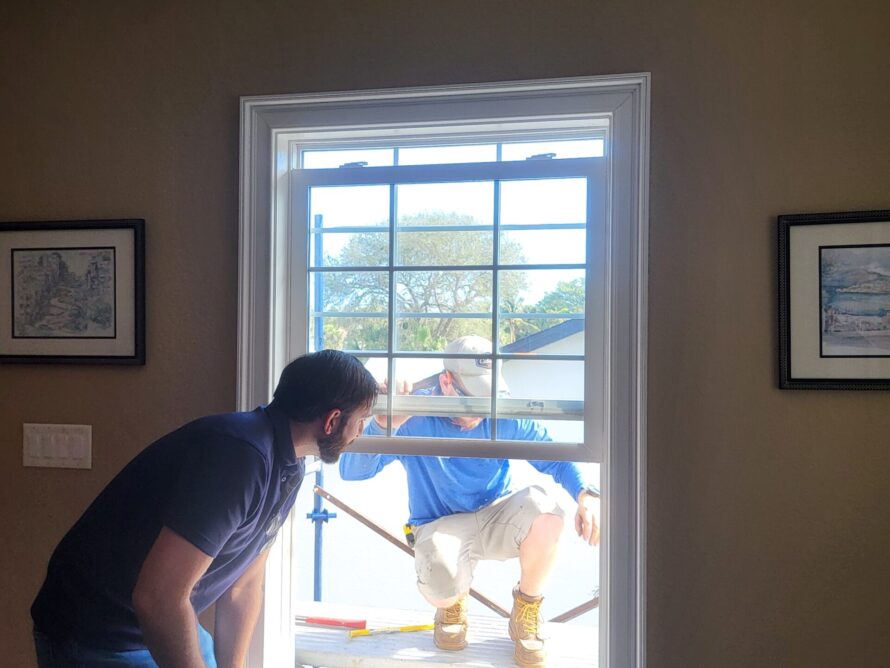
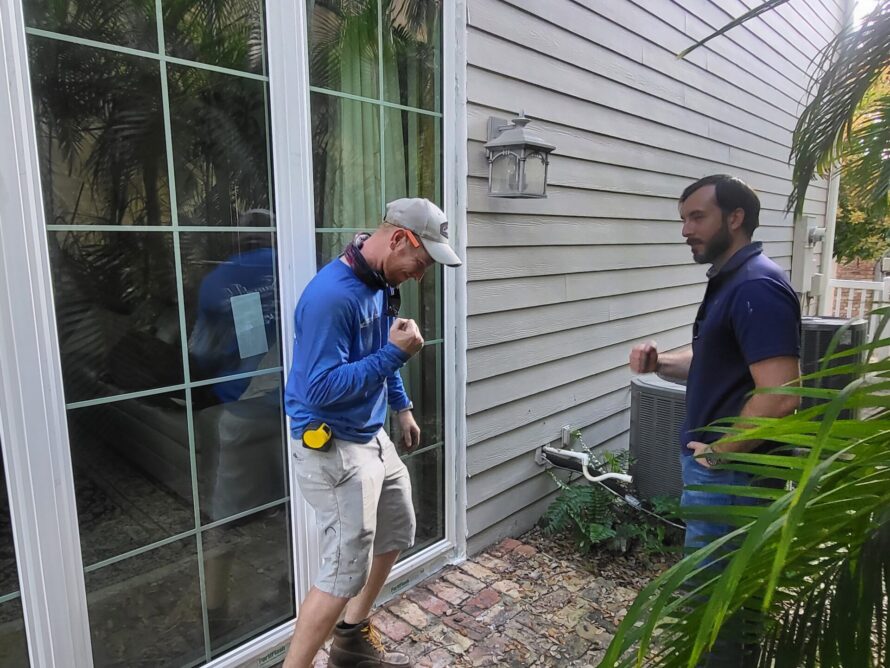
At Sunset View, every installer is a member of our in-house team — not a subcontractor brought in for your job. That distinction matters for two reasons. First, it means consistent installation standards on every project. Second, it's what makes our 10-year workmanship warranty possible. We stand behind the installation because our own crew did it and we'll come back if anything ever needs attention.
Most competitors offer a 1-year workmanship warranty. That gap reflects a real difference in accountability. If you're comparing quotes, ask each contractor who will be in your home and what warranty covers the workmanship after the crew leaves.
Frequently Asked Questions
Are vinyl windows strong enough for hurricanes in Florida?
Yes. Vinyl impact windows meet all Florida code requirements for wind-borne debris regions when they carry Florida Product Approval and the correct Design Pressure rating for your opening size and location. The frame material is not the determining factor — the full system is.
Do aluminum windows make your home hotter?
Standard aluminum frames conduct heat more readily than vinyl. Modern aluminum windows with thermal breaks reduce that gap significantly, but vinyl still outperforms in a direct insulation comparison. The glass selection — particularly the Solar Heat Gain Coefficient — has a larger effect on solar heat gain than the frame material alone.
How much can new windows reduce my energy bills in Florida?
Replacing older or single-pane windows with impact-rated, Low-E glass windows can reduce cooling costs by up to 30%. The U.S. Department of Energy estimates annual savings of $101–$583 for Florida homeowners replacing single-pane windows with ENERGY STAR-rated products, depending on the home and its current windows.
Which material holds up better near the coast in Brevard County?
Vinyl is not maintenance-free in coastal conditions. It can scratch, crack, and fade over time, especially with constant salt exposure, often requiring just as much upkeep as aluminum. Aluminum, when built with proper coastal-rated finishes and maintained correctly, performs exceptionally well in high-salt environments. For barrier island and waterfront homes, aluminum is typically the preferred choice and can last a lifetime with proper care.
Ready to Make the Right Call for Your Home?

The vinyl versus aluminum decision doesn't have to be complicated — but it does deserve a real answer based on your home, not a generic recommendation.
At Sunset View Windows & Doors, we walk through your home before recommending anything. We look at your opening sizes, your exposure, and what your home actually needs. Then we give you a straight recommendation — whether that's vinyl, aluminum, or a combination of both.
We're a veteran-owned, second-generation business serving Brevard and Indian River Counties. Our in-house crews handle every installation. Every project comes with a 10-year workmanship warranty and a dedicated service team if you ever need us after the job is done.
Browse our impact window options or schedule a free consultation — no pressure, no pitch, just honest guidance on what makes sense for your home. Financing is also available if you want to move forward without the full upfront cost.