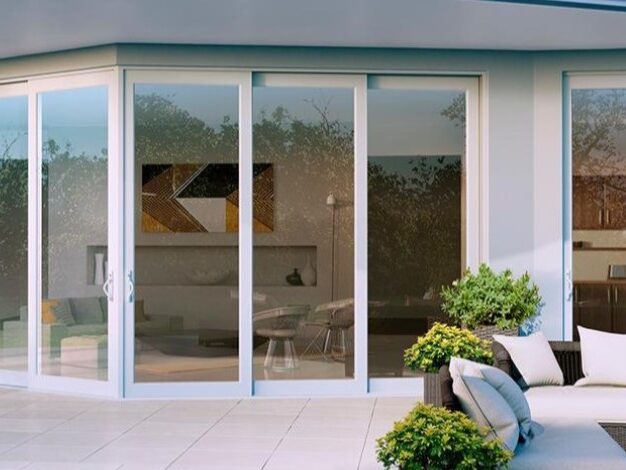

An aluminum sliding door uses a metal frame to support large glass panels across a wide opening, while a vinyl sliding door uses a multi-chambered PVC frame built for insulation and corrosion resistance in standard patio applications. Both are available in impact-rated configurations for Florida. The one that belongs in your home depends on the size of your opening, your wind exposure, and what you're trying to get out of the door in the long term.
For homeowners in Brevard and Indian River Counties, this comparison comes up on almost every patio door quote. Here's how to read it clearly.
Quick Comparison: Aluminum vs Vinyl Sliding Doors
| Feature | Aluminum | Vinyl |
| Structural strength | Higher, ideal for large panels | Best for standard openings |
| Frame profile | Slim, modern sightlines | Thicker frames |
| Energy efficiency | Good with thermal break and Low-E glass | Naturally insulating |
| Impact resistance | Common in large impact-rated systems | Available with reinforcement |
| Coastal performance | Requires powder-coated or anodized finish | Naturally corrosion-resistant |
| Maintenance | Low | Very low |
| Upfront cost | Higher | More affordable |
| Best for | Large openings, modern design | Standard patio replacement, energy focus |
What Are Aluminum Sliding Doors?

Aluminum sliding doors use strong metal frames to support large glass panels that glide along a track. In Florida homes, they most often show up where someone wants a wide opening, a modern look, or a high-performance impact system for a large span.
Because aluminum is structurally stronger than vinyl, it meets the higher design pressure ratings required for wide openings under the Florida Building Code. That makes it the standard choice for expansive patio systems, multi-panel configurations, and any opening where the glass size pushes past what a vinyl frame can support.
A quality aluminum system includes a thermal break, an insulating barrier built into the frame that limits heat conduction, along with laminated Low-E impact glass. When both are present, aluminum performs well on energy efficiency. Without the thermal break, the metal frame conducts considerably more heat than you want in a Florida summer.
What Are Vinyl Sliding Doors?
Vinyl sliding doors use multi-chambered PVC frames that insulate by nature and resist corrosion without any special coating or finish. For most Florida homeowners, replacing a standard two-panel patio door with vinyl is a practical, durable option that handles the climate well.
The frame is thicker than aluminum, which means a slightly lower glass-to-frame ratio on the same opening size. For a standard patio door, that trade-off is minimal. For a wide panoramic opening, it starts to matter.
Vinyl doesn't corrode. Humidity, coastal moisture, and salt air, which degrade metal finishes over time, have minimal effect on a quality PVC frame. Maintenance comes down to an occasional wipe-down of the tracks.
Which Is More Energy Efficient in Florida?
In Florida's climate, energy efficiency is mostly a question of how much solar heat your door lets in, not how well it holds heat in during winter. That changes how you read the specs.
Vinyl frames insulate naturally because PVC conducts heat poorly. A vinyl door performs well out of the box without additional engineering at the frame level.
Aluminum frames conduct heat more readily, but a thermal break closes most of that gap. At that point, as the U.S. Department of Energy notes in its window and door energy performance ratings, the glass package matters more than the frame material. Low-E laminated glass with a low SHGC rating reduces solar heat gain regardless of whether the frame is aluminum or vinyl.
For most homeowners, glass selection will have a bigger impact on their FPL bill than the frame choice.
Which Is Stronger and Better for Large Openings?
Aluminum is the better choice for large openings, and it's not particularly costly. The structural strength of metal allows aluminum frames to support bigger glass panels and meet higher design pressure ratings than vinyl can reliably achieve.
Design Pressure (DP) measures the maximum wind force a door can withstand before failing, expressed in pounds per square foot. DP50 rating corresponds to wind resistance of approximately 173 mph and is the recommended minimum for coastal Florida homes. Wider openings and greater wind exposure often require ratings above that level, where aluminum's structural advantage becomes decisive.
Vinyl handles standard patio door sizes well. But if your opening is wide, if you're planning a multi-panel system, or if your home's wind exposure calls for higher design pressure ratings, aluminum is the right frame for the job.
Which Performs Better in Florida's Coastal Climate?

Both materials hold up well in Brevard and Indian River Counties when the product is quality and the installation is done right. They get there differently.
Vinyl is naturally corrosion-resistant. The salt air and coastal moisture that wear down metal finishes over time have little effect on PVC. It requires no coating to protect it.
Aluminum needs a powder-coated or anodized finish to resist corrosion in a coastal environment. A quality aluminum system will have this from the manufacturer. A cheap one may not, and you'll see the difference within a few years.
Which Is More Affordable?
Vinyl sliding doors cost less upfront, and for a standard patio door replacement, the performance difference rarely justifies paying more. If you're replacing a two-panel door in a typical opening, vinyl offers a quality, impact-rated door at a lower price point.
Aluminum costs more because of its structural capability, the manufacturing required for slim-profile impact systems, and the finish work needed for coastal durability. If your opening genuinely needs it, that cost is justified. If it doesn't, you're paying for strength you won't use.
For most homeowners, the decision isn't really about budget. It's about what the opening actually requires. If you're thinking through the full cost picture, the average cost of impact windows and doors in Florida reflects the factors that drive pricing across different product types.
How to Choose: A Simple Decision Framework
The choice usually comes down to opening size and design pressure requirements more than budget or aesthetics.
Choose aluminum sliding doors if:
- Your opening is large or spans multiple panels, where vinyl can't meet the required design pressure rating
- Your home faces high wind exposure or sits in a high-exposure coastal zone where a DP50 or higher is required
- Your design calls for slim sightlines and maximum glass visibility across a wide span
Choose vinyl sliding doors if:
- You're replacing a standard two-panel patio door where the opening size stays the same
- Energy performance and lower upfront cost are the priorities, and your opening doesn't require the structural capacity of aluminum
- You want a low-maintenance, naturally corrosion-resistant frame for a coastal home without the added complexity of a coated finish
Not sure which category your home falls into? That's the right question to bring to your installer before you decide. If you're also weighing the broader sliding door vs. window question, single-hung vs. sliding windows for Florida homes lays out that comparison.
Frequently Asked Questions
What is an aluminum sliding door?
An aluminum sliding door is a large glass panel system framed in metal that glides horizontally along a track. In Florida, aluminum is the standard frame material for wide, impact-rated sliding door systems because it supports higher design pressure ratings and larger glass spans than vinyl.
What is a vinyl sliding door?
A vinyl sliding door uses a multi-chambered PVC frame to support glass panels on a horizontal track. Vinyl frames insulate naturally, resist corrosion without a protective coating, and cost less upfront than aluminum, making them a practical choice for standard patio door replacements in Florida.
Are aluminum sliding doors better than vinyl?
Aluminum is better for structural strength and large openings. Vinyl is better for natural insulation and upfront affordability. The right choice depends on your opening size, wind exposure, and priorities.
Do vinyl sliding doors last as long as aluminum?
Quality vinyl doors last decades in Florida's climate and hold up well against humidity and salt air. Aluminum maintains structural rigidity longer in large or high-stress systems. For a standard patio door, both will outlast most homeowners' expectations.
Are aluminum sliding doors energy efficient?
Yes, when built with a thermal break and Low-E impact glass. Without a thermal break, aluminum conducts more heat than vinyl. The glass selection typically has more influence on energy performance than the frame material.
Can vinyl sliding doors handle hurricanes?
Yes. Impact-rated vinyl sliding doors carry Florida Product Approval certification. For larger-impact systems with wide spans and high design-pressure requirements, aluminum is more commonly specified for its structural advantages.
Which sliding door performs better in hurricanes?
Both materials can meet Florida's impact standards when properly engineered and certified. Confirm the Design Pressure rating, Florida Product Approval certification, and that the installation meets local building code requirements, regardless of which material you choose.
Do vinyl sliding doors warp in Florida heat?
Quality vinyl systems engineered for Florida's temperature range don't warp. Vinyl expands slightly with heat, and proper installation with appropriate tolerances accounts for that. Cheap vinyl in the wrong conditions is a different story.
Do aluminum sliding doors get hot in direct sun?
Aluminum conducts heat more than vinyl, which can make the frame warm to the touch in direct sunlight. A thermal break reduces that transfer. The glass package typically has more impact on interior comfort than the frame.
Which sliding door reduces noise better?
Noise reduction comes primarily from the glass, not the frame. Laminated impact glass improves sound performance meaningfully in both aluminum and vinyl systems.
Why Brevard and Indian River County Homeowners Choose Sunset View
Sunset View Windows & Doors is a veteran-owned, family-operated company serving Brevard and Indian River County since 2006, with 20 years of field experience and a team that lives and works in the same communities you do.
Every installer who comes to your home is a Sunset View employee. That's what makes our 10-year workmanship warranty possible, one of the longest in the industry. When your own team does the work, you stand behind it differently than when you hand it off to a subcontractor.
As an authorized PGT Gold and Platinum Certified Dealer, we carry impact-rated aluminum and vinyl sliding door systems with Florida Product Approval, built for the wind exposure and coastal conditions of this market. We'll tell you which one belongs in your home based on your opening, your HOA requirements, and your goals, not on what's easiest for us to sell.
If you're ready to talk through your options, request a free quote, same-day response, no pressure, just straight answers.